
Laser Vision Correction


The following surgical techniques are commonly used:
Do the Self-Test | Find out if Laser eye surgery or Lens Implantation is right for you
Try our savings calculator
How much does the procedure cost?
We will then provide you with a price list for the appropriate procedure.
Please note that rates are per eye.
"*" indicates required fields
FAQ
1- Are myopia / hyperopia or astigmatism operable?
Yes. The main techniques are LASIK and PRK (surface). They reshape the cornea to refocus the image on the retina. The choice depends mainly on corneal thickness/shape, your prescription, and your lifestyle.
2- What is the success rate?
Modern series show that >99% of patients are satisfied with the procedure.
3- What are the risks?
The most common is temporary dry eye; halos/glare at night, over- or under-correction, inflammation/infection (rare) are also possible. More serious complications are extremely rare when the patient meets proper surgical criteria.
4- Can myopia come back (regression) after laser surgery?
Yes, possible but uncommon. More likely if surgery is performed on unstable or high myopia, or in younger patients. Free enhancements are sometimes offered.
5- At what age can you get surgery? Is there a maximum age? Is it possible after 40 or 50?
Minimum age: generally ≥ 18–21 years with a stable prescription (~12–24 months).
After 40–50: yes, but presbyopia (near vision) and possible alternatives (monovision laser, implants) should be discussed.
No strict maximum age: eligibility depends mainly on the cornea and overall examination.
6- Does complementary insurance reimburse the procedure?
In Belgium, complementary insurance reimburses between €0 and €500 for refractive surgery.
7- Is the procedure permanent?
The corneal correction is permanent, but vision may change with age (presbyopia, cataract) or show slight regression.
8- Can you have surgery twice (enhancement / touch-up)?
Yes, if the cornea allows it (sufficient residual thickness); sometimes the enhancement is done on the surface (PRK) or via LASIK.
9- How long does the procedure take?
The laser itself takes a few seconds per eye; the full session (preparation + surgery) typically takes 15–30 minutes per eye.
10- What is the recovery like? When can you return to work / sports?
LASIK: fast recovery; many return to work the next day (if screen use is tolerated). Avoid contact sports ~1 month.
PRK: slower recovery (discomfort 2–4 days, driving ~1 week).
11- Can you go blind after myopia surgery?
All surgery carries a non-zero risk. However, the risk of severe vision loss is extremely low when selection and asepsis are appropriate. Serious complications (infection, ectasia) are rare and usually well managed.
13- Is it possible to get a sick leave note after surgery?
It depends on the country, job, and technique. In practice:
LASIK: often return after 1–2 days.
PRK: plan for 3–4 days.
14- Which operation is “to no longer need glasses”?
For myopia: LASIK/PRK.
If myopia > –9D: ICL implant.
After 45–50 or if laser-ineligible: lens surgery (refractive lens exchange) with multifocal implant, depending on the profile.
15- When is the ideal time to have surgery?
When the prescription is stable, the ocular surface is healthy, the cornea is eligible, and benefits/risks are well understood. Avoid during pregnancy.
16- Is it possible to cure myopia without surgery? / “stretch your eyes” naturally?
No. You cannot shorten an elongated eye with exercises.
In children, progression can be slowed (low-dose atropine, myopia-control glasses/CLs, visual hygiene, more outdoor time), but this is not a “cure.”
In adults, optical correction or surgery are the solutions.
17- Is it normal for myopia to increase after 40? Does myopia improve with age?
True myopia is generally stable in adulthood; after 40, presbyopia (near-vision difficulty) appears.
Sometimes pseudo-myopia (accommodation spasm) or lens-related variations can occur. This is assessed during consultation.
19- Who cannot get surgery?
Main contraindications: keratoconus/suspicion, cornea too thin or irregular, severe dry eye, uncontrolled glaucoma, progressive retinal disease, pregnancy, unstable prescription, systemic diseases affecting healing. Safety and thickness thresholds are respected.
18- Does myopia “come back” 10 years after surgery?
Most results remain stable, but slight regression can occur after 10 years, especially with high corrections. Age-related changes (presbyopia/cataract) are independent of laser surgery.
20- What is the highest myopia that can be operated on?
It depends on the cornea: laser is often performed up to about –8 to –10D if the cornea allows it; beyond this, phakic implants (ICL) are considered. Only the workup determines the safe limit.
21- What is the cost of laser vision correction? (variants)
Request a detailed quote by clicking HERE.
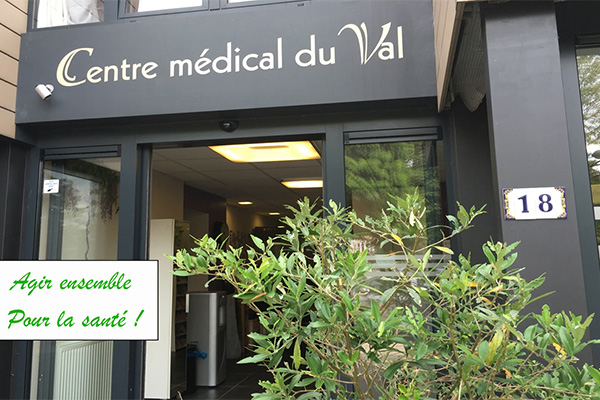
Val Medical Center
Ophthalmology in Brussels – Woluwe-Saint-Pierre
Ask for availability at the secretariat below
Contact
Tel : 02 772 16 24
Rue Edouard Gersis 18,
1150 Woluwe-Saint-Pierre
At 100m Dumon place
Metro : Stockel
Bus : 36
Tram : 39
CONTACT
You want to make an appointment? You can either call one of the 4 sites via the button below, or make an appointment directly online in the Contact section, or send me a message in the Contact section
The ophthalmology secretaries and Dr. Qin’s team are available to answer all your questions and requests for information in order to make the best choice. I will be pleased to welcome you at one of the 4 sites.